A mobile hair salon business plan outlines the vehicle buildout costs, local parking permits, travel scheduling, and on-site pricing formulas required to operate a profitable traveling beauty service. By eliminating commercial storefront leases and bringing customized haircutting and coloring services directly to homes, corporate offices, and wedding venues, independent stylists can capture premium appointment rates while maintaining full control over their working calendar. Launching a self-contained styling vehicle allows beauty entrepreneurs to establish an agile, asset-backed enterprise that adapts rapidly to local market demand.
Operating a mobile studio requires balancing traditional salon management with automotive logistics. Developing an actionable salon suite business plan provides the underlying operational discipline needed to manage appointment schedules, calculate product inventory, and maintain healthy gross profit margins while traveling between client locations.
Federal guidance from the SBA Business Plan Guide demonstrates that structured financial projections and clear operational roadmaps are essential for securing equipment loans and managing cash flow. Building a detailed business blueprint ensures you purchase appropriate vehicle platforms and reserve sufficient operating capital for fuel, maintenance, and seasonal volume shifts.
Selecting a Mobile Vehicle and Interior Conversion Buildout
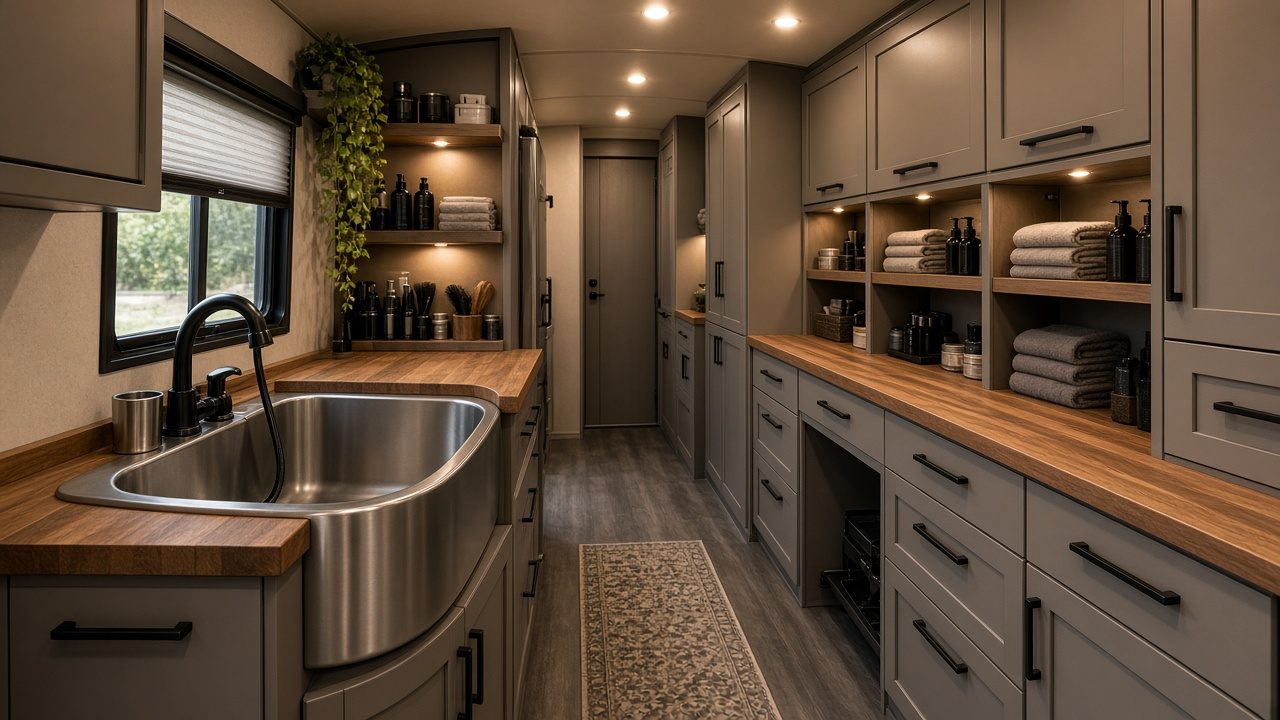
The foundation of any traveling beauty enterprise is the physical vehicle platform chosen for the buildout. Beauty professionals commonly select high-roof cargo vans, step vans, or custom towable trailers depending on target clientele, driving preferences, and startup capital. High-roof commercial vans provide agile maneuvering through suburban driveways and downtown streets, while custom trailers offer expansive interior square footage for multi-chair setups.
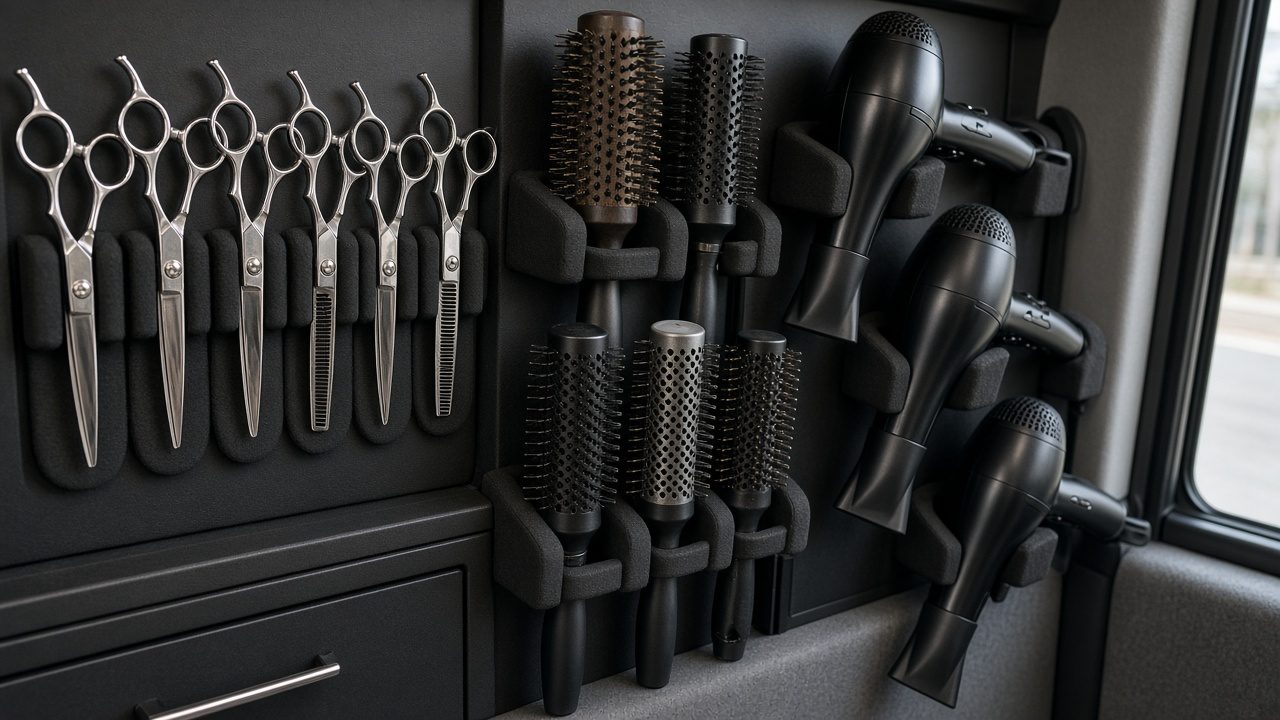
Interior layout planning must prioritize client comfort, ergonomic movement, and weight distribution. Installing lightweight marine-grade cabinetry, non-porous antimicrobial flooring, and a securely bolted hydraulic styling chair ensures durability across thousands of miles of road travel. All styling tools, product containers, and chemical bottles require specialized locking latches to prevent shifting during transit.
Proper ventilation and climate control represent crucial investments in client comfort. Because vehicle cabins experience intense solar heat gain and rapid winter cooling, installing a heavy-duty rooftop air conditioning unit with an auxiliary heating element is mandatory. Auxiliary ventilation fans must run continuously during chemical treatments to exhaust fumes and maintain pristine indoor air quality.
Calculating Power Generation and Battery Storage Capacity
Delivering on-site styling services requires substantial electrical power to operate high-wattage hair dryers, curling irons, interior LED lighting, and hot water heaters simultaneously. Independent operators generally rely on a hybrid power strategy combining a quiet commercial inverter generator with a bank of lithium iron phosphate batteries and a heavy-duty power inverter.
A typical professional blow dryer consumes between 1,600 and 1,875 watts, meaning your electrical system must handle surge loads of at least 4,000 watts when multiple styling appliances and climate units operate together. Incorporating shore power plug-in adapters gives you the flexibility to connect directly to an exterior electrical outlet at residential or event venues, saving generator fuel.
Plumbing and Wastewater Holding Tank Logistics
Providing shampooing, conditioning, and color rinsing services requires an independent onboard plumbing system. A standard mobile beauty buildout features a fresh water holding tank holding twenty-five to forty gallons, paired with a slightly larger greywater tank designed to capture chemical runoff safely.
Water delivery relies on a twelve-volt demand water pump delivering steady pressure to a compact commercial shampoo bowl. An on-demand tankless water heater supplies immediate hot water for client comfort without occupying excessive interior cabinetry space. Greywater must be emptied at designated commercial RV dump stations in compliance with local environmental ordinances.
Route Scheduling and Territory Travel Logistics
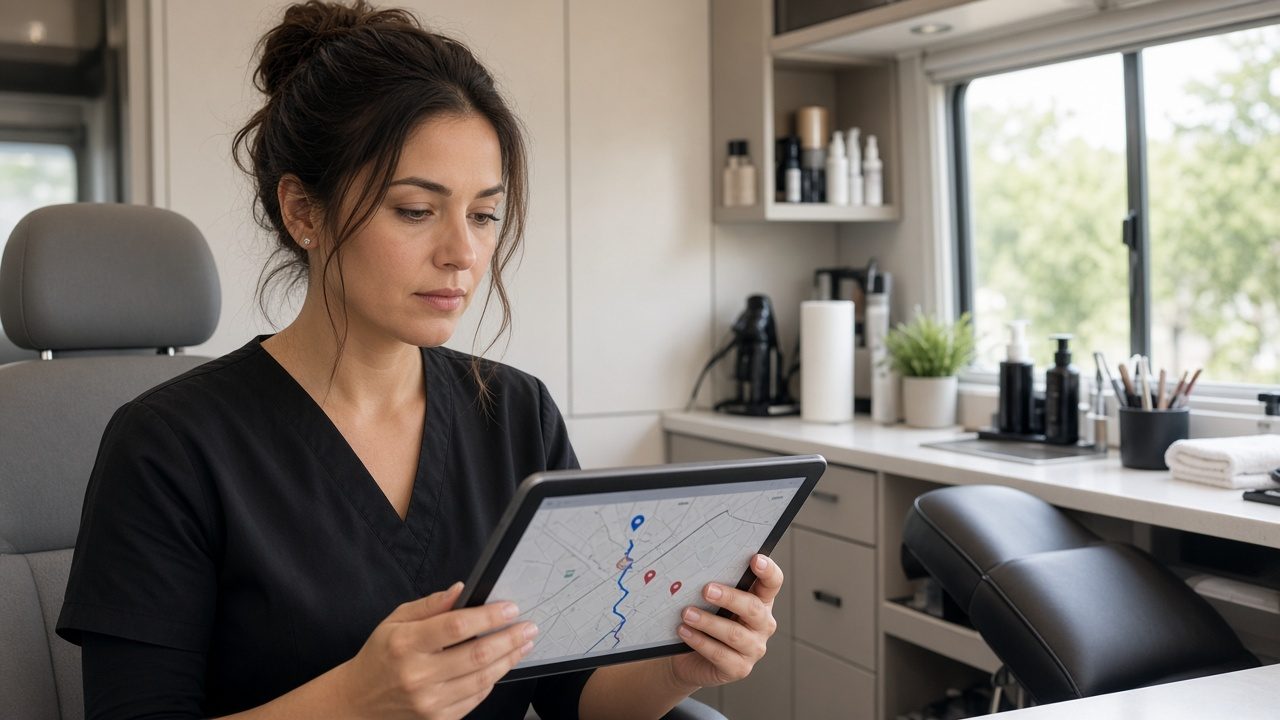
Unlike stationary salon operators who remain in one location, mobile beauty professionals must treat driving time as a tangible business expense. Inefficient scheduling that requires zigzagging across a metropolitan area burns expensive vehicle fuel and consumes billable hours. Establishing structured geographical service zones is essential for maintaining daily efficiency.
Divide your broader market territory into focused quadrants or neighborhood clusters, assigning specific days of the week to each zone. For instance, you might dedicate Tuesdays to northern residential suburbs, reserving Thursdays for southern corporate business parks. Educating clients to book appointments during their neighborhood’s scheduled route day maximizes billable appointments and minimizes idle transit time.
Incorporating realistic buffer windows between appointments prevents schedule cascades when traffic delays occur. While a traditional suite stylist might allow ten minutes between appointments, a mobile operator requires thirty minutes to disconnect utilities, secure loose tools, drive to the next location, and park safely before welcoming the next client.
Clustering Group and Corporate Bookings
One of the most lucrative strategies for traveling stylists is anchoring daily schedules with multi-client bookings. Partnering with residential communities or corporate office campuses allows you to park your vehicle in a single designated space for four to eight hours while servicing multiple consecutive clients.
Corporate pop-ups and bridal party bookings eliminate midday driving entirely, allowing you to achieve the productivity of a stationary suite without paying commercial lease overhead. Stylists transitioning to independent operations can explore our guide to how to start a hair salon business for effective client acquisition strategies that translate seamlessly to mobile client rosters.
State Board Licensing and Local Business Permit Rules
Operating a beauty facility on wheels introduces regulatory oversight spanning cosmetology state boards, municipal zoning boards, health departments, and commercial motor vehicle divisions. Navigating these compliance hurdles proactively prevents costly operational shutdowns and administrative fines.
Most state boards of cosmetology maintain specific administrative rules governing mobile beauty facilities. These regulations typically mandate minimum fresh water capacities, approved wastewater disposal methods, chemical storage security, and annual physical vehicle inspections. Operators must display both their personal cosmetologist license and an approved mobile salon facility establishment license inside the vehicle.
According to commercial permit guidelines from the SBA Business Licenses and Permits Guide, businesses operating across multiple municipalities often need local business licenses or transient vendor permits for each jurisdiction they serve. Reviewing local street parking ordinances is equally vital, as certain residential neighborhoods restrict parking large commercial vehicles for extended service windows.
Commercial Driver Rules and Vehicle Weight Ratings
Standard cargo vans and single-axle trailers typically fall well below the 26,001-pound gross vehicle weight rating threshold that triggers commercial driver license requirements. As long as your converted vehicle remains under this federal weight threshold and carries fewer than sixteen passengers, you can legally operate it with a standard Class C driver license.
However, you must register the vehicle as a commercial asset with your state department of motor vehicles and verify that your gross vehicle weight remains within factory suspension tolerances after adding water tanks, cabinetry, and equipment.
Projecting Operating Expenses and Fleet Fuel Overhead
While traveling beauty operations eliminate high commercial real estate rents, they introduce specialized operational expenses that must be monitored diligently. Understanding your true cost per operating hour allows you to set sustainable appointment rates and protect monthly profit margins.
Vehicle-related recurring expenses include commercial auto insurance, regular fuel, generator servicing, preventative mechanical maintenance, and tire replacement reserves. Because mobile studios carry heavy equipment loads, routine servicing occurs much more frequently than on personal passenger vehicles.
Direct service costs mirror traditional studio operations, including backbar hair color, developer, styling products, and laundry sanitation. Tracking chemical inventory closely ensures you carry adequate stock for daily appointments without overloading vehicle storage shelves or exceeding gross vehicle payload ratings.
Establishing an Automotive Depreciation and Replacement Reserve
Every commercial vehicle has a finite operational lifespan dictated by mileage accumulation and mechanical wear. Diligent business owners set aside a dedicated capital reserve fund of three hundred to five hundred dollars each month to prepare for major engine repairs or future chassis replacement.
Failing to budget for eventual vehicle replacement leaves business owners vulnerable when an older van encounters mechanical failure. Maintaining a robust capital reserve guarantees your business can repair or replace its primary revenue-generating asset without disrupting service delivery.
Structuring Service Menu Fees for On-Site Hair Clients
Pricing mobile beauty appointments requires moving beyond standard salon price sheets. Because you deliver an exclusive, private, and frictionless luxury experience directly to the client’s doorstep, your pricing model should reflect the premium convenience provided.
Stylists should establish base service fees that exceed local brick-and-mortar salon averages by fifteen to twenty-five percent. Independent beauty professionals can review our formulas for pricing hair services to ensure their hourly rates account for all direct expenses, administrative travel time, and desired net personal earnings.
In addition to elevated base service prices, implementing a transparent mobile travel surcharge protects your margins when traveling outside your core geographical zone. Many successful operators include up to ten miles of travel within their base service ticket, applying a standardized mileage fee of two dollars per additional mile for distant appointments.
Requiring Minimum Service Tickets for House Calls
To avoid spending sixty minutes of driving and setup time on a twenty-minute children’s haircut, establish a strict minimum appointment ticket threshold. Many mobile operators require a minimum service spend of one hundred dollars before booking a single-client residential house call.
Clients seeking smaller individual services can be encouraged to bundle treatments, such as pairing a haircut with deep conditioning or glossing, or booking together with a neighbor or family member. This policy ensures every trip away from your base generates predictable, profitable revenue.
Frequently Asked Questions
How much does it cost to build a mobile hair salon?
Converting a high-roof commercial cargo van or trailer into a fully equipped mobile salon generally costs between thirty thousand and eighty thousand dollars, depending on vehicle age, plumbing setups, and generator power systems. Purchasing an existing pre-converted mobile salon can reduce upfront conversion time and initial custom fabrication expenses.
Do cosmetology boards allow mobile hair services in every state?
Most state cosmetology boards permit mobile beauty salons, but specific licensing rules, physical vehicle inspections, and operational requirements vary significantly by jurisdiction. Operators must verify local state board regulations regarding onboard water capacity, chemical ventilation, sanitation logs, and mobile facility establishment permits before launching.
How do mobile salons handle fresh water and shampoo wastewater?
Mobile beauty vehicles utilize onboard fresh water holding tanks paired with electric demand pumps and on-demand tankless water heaters to supply warm water for hair washing. Wastewater drains into a sealed greywater holding tank beneath the chassis, which must be emptied at authorized commercial dump stations in accordance with environmental standards.
Can a stylist operate a mobile salon without a commercial driver license?
Yes, standard cargo vans and single-axle trailers weighing under twenty-six thousand pounds do not require a commercial driver license to operate legally. Independent stylists can drive standard commercial salon vans with a regular Class C driver license, provided the vehicle meets standard commercial registration and auto insurance requirements.