Mastering how to price hair services accurately is the single most critical factor in transforming technical styling talent into a profitable, sustainable salon business. Establishing your service rates based on exact overhead costs, chemical product usage, and personal income goals ensures that your business covers all expenses while generating healthy profit margins. For independent stylists operating in private suites or rental booths, scientific pricing formulas replace emotional guesswork with financial predictability.
Many stylists set their service prices by surveying neighboring beauty salons or charging whatever their former employer established. However, arbitrary pricing often leads to chronic cash flow deficits, where a stylist works exhausting fifty-hour weeks yet struggles to pay weekly studio rent or set aside funds for quarterly income taxes. Developing a comprehensive salon suite business plan allows you to identify your exact operating costs and construct pricing tiers that ensure long-term solvency.
Financial management benchmarks published by the Small Business Administration Financial Management Guide emphasize that sustainable pricing models must incorporate fixed overhead, variable materials, and target labor earnings. By approaching your service pricing with rigorous accounting discipline, you establish an independent business built on measurable financial stability.
Calculating Hourly Overhead for Hair Services

To determine what you must charge per hour of chair time, you must first calculate your fixed monthly operating expenses. Fixed expenses are recurring overhead costs that remain constant regardless of whether you service ten clients or fifty clients in a given month. Understanding these baseline commitments establishes the minimum revenue your studio must generate simply to keep the doors open.
Add together all recurring monthly facility obligations: commercial studio rent, commercial general liability insurance premiums, booking software subscriptions, merchant credit card processing fees, business phone service, towel laundry costs, and shears sharpening services. In a leased private studio, fixed monthly facility overhead typically totals between twelve hundred and twenty-four hundred dollars. Stylists exploring chair leasing can examine our guide to renting a salon suite to understand common lease overhead breakdowns.
Once your monthly fixed overhead is calculated, divide that total by the number of billable service hours you plan to work each month. If your fixed overhead is sixteen hundred dollars and you provide hands-on client services for eighty hours per month, your fixed overhead cost is exactly twenty dollars per billable hour. Every hour a client sits in your chair, twenty dollars goes directly toward paying your physical studio rent and operational bills before you earn a single penny of personal income.
Accounting for Non-Billable Administrative Hours
A frequent error among independent cosmetologists is assuming that a forty-hour work week equals forty billable client hours. In reality, independent operators spend eight to twelve hours each week on non-billable tasks: sanitizing stations, mixing chemical formulations, restocking dispensary shelves, answering client inquiries, and managing financial books.
Base your hourly calculations strictly on realistic billable chair hours. Planning for twenty-four to twenty-eight billable hours per week ensures that your calculated hourly overhead rate reflects your true working capacity. Overestimating billable hours artificially lowers your calculated rates, resulting in unexpected revenue shortfalls.
Tracking Chemical Product Usage and Dispensary Costs
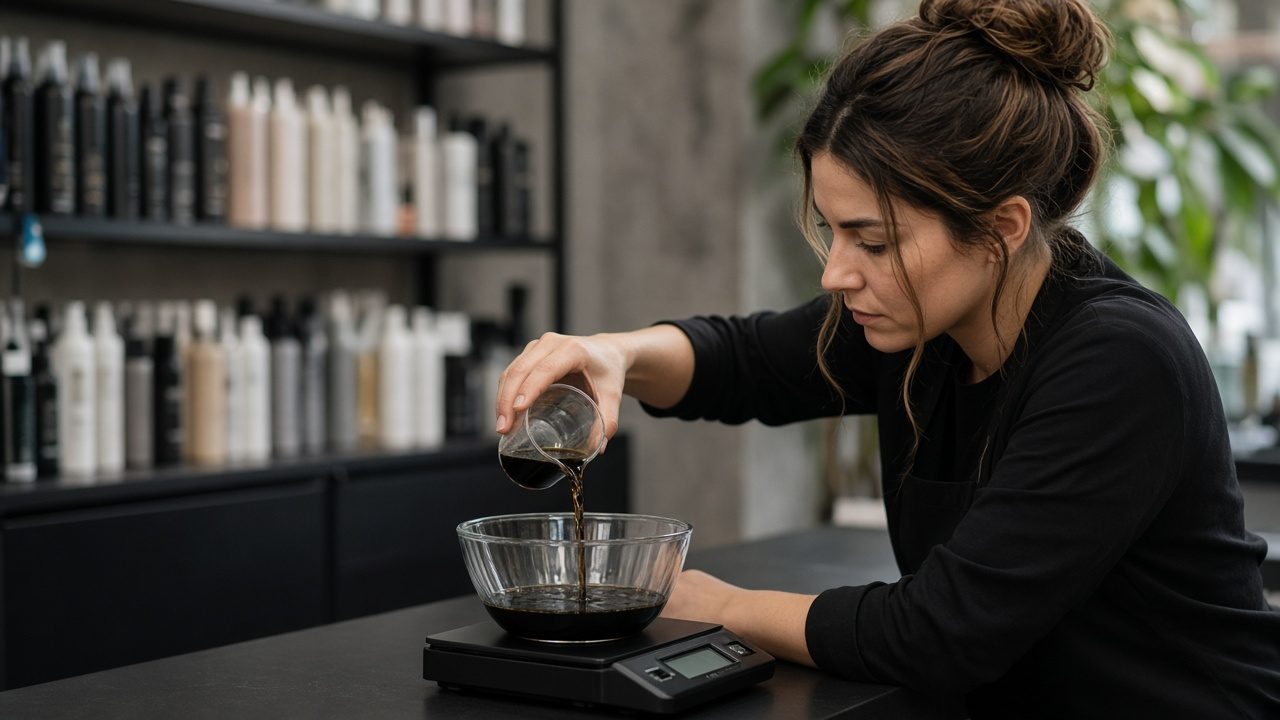
Chemical consumables—such as permanent hair dyes, lightening bleaches, cream developers, bond-building additives, and toning glazes—represent variable expenses that fluctuate with service volume. When establishing your salon menu price list, you must factor the direct cost of chemical product into each service price rather than absorbing it out of your labor profits.
Using a digital salon scale at your color dispensary bar is the only accurate way to track product costs. Weigh your color bowls before and after dispensing product to record the exact number of grams or ounces applied during each treatment. When you know that an average root touch-up consumes forty grams of color and sixty grams of developer, you can calculate the exact wholesale cost of those raw materials down to the penny.
On average, chemical backbar costs should not exceed eight to twelve percent of your gross service ticket price. If a complex balayage service consumes thirty dollars worth of professional lightener, bond-builder, and custom toner, charging one hundred fifty dollars leaves you with inadequate margins after accounting for rent and labor. Utilizing a standardized salon pricing calculator or spreadsheet allows operators to price high-product services profitably.
Managing Product Waste and Dispensary Overhead
Imprecise chemical mixing leads to substantial product waste that silently drains salon profitability. Mixing extra product that ends up washed down the shampoo bowl drain represents pure profit loss. Training yourself to mix smaller incremental batches of chemical formulations eliminates waste and protects your profit margins on high-volume service days.
In addition to chemical color, include consumable supplies in your variable expense calculations. Processing foils, disposable nitrile gloves, neck strips, color capes, and specialized shampoo backbar treatments cost between two and five dollars per service appointment. Factoring these minor consumables into your service pricing ensures your business retains healthy net margins.
Setting Target Hourly Rates for Hair Services
After calculating your fixed overhead and variable product costs, establish your target hourly wage for professional labor. As a self-employed business owner, your labor rate must cover your personal living expenses, retirement contributions, healthcare insurance, and federal self-employment taxes. You can review tax requirements outlined by the IRS Self-Employed Individuals Tax Center to anticipate quarterly tax obligations.
Determine your desired annual personal take-home income before taxes. For instance, if your personal income goal is seventy-two thousand dollars annually and you work forty-eight weeks per year at twenty-five billable hours per week, your target net labor earning is sixty dollars per billable hour. Adding your hourly facility overhead of twenty dollars to your target labor wage of sixty dollars results in a baseline hourly service rate of eighty dollars, plus product costs.
This systematic approach explains why different services carry different prices. A sixty-minute haircut requiring minimal product is priced at eighty dollars. A ninety-minute single-process color requiring fifteen dollars in chemical product is priced at one hundred thirty-five dollars. By pricing each service using this three-part formula—hourly overhead plus target labor plus product costs—you guarantee that every hour worked generates your required income.
Comparing Suite Pricing With Traditional Booth Rental
Stylists evaluating booth rental arrangements can explore our comprehensive analysis of salon booth rental economics to understand how chair leasing overhead compares with private studio leases. While chair rentals typically feature lower weekly rent, private studio operators often command significantly higher hourly labor rates due to enhanced client privacy and luxury amenities.
Private suite environments justify premium service fees because clients receive dedicated one-on-one attention without the noise, clutter, and distractions of open-concept salons. Communicating the value of your private, tranquil studio space reinforces your ability to maintain higher hourly service rates.
Structuring Transparent Service Menus and Specialty Add-Ons
Once your base pricing formulas are established, organize your service rates into an easy-to-understand client menu. Avoid publishing confusing à la carte menus that require clients to calculate separate charges for shampooing, blow-drying, and styling. Today’s clients prefer all-inclusive, transparent pricing packages that eliminate unexpected fee surprises at the checkout desk.
Present core menu services as complete packages that include the haircut, standard blowout finish, and bond-building treatment. Packaging services together elevates your average ticket total while providing a superior client experience. Clearly explain what each package includes on your digital booking portal.
Offer high-margin specialty add-ons for clients seeking enhanced hair care. Treatments such as scalp detoxifications, deep conditioning moisture masks, glossing refreshes, and split-end repair treatments require minimal product and fifteen minutes of additional time, yet command twenty-five to forty-five dollars in additional revenue. Add-on treatments allow motivated clients to customize their visit while increasing your daily studio profit.
Communicating Price Adjustments to Existing Clients
As your experience expands, inflation increases wholesale supply prices, and your appointment schedule fills, raising your service prices becomes necessary. However, many independent cosmetologists hesitate to increase their rates due to fear of client backlash or losing long-time customers.
When executing price adjustments, provide your clients with four to six weeks of advance notice. Send a professional, warm email or text announcement thanking clients for their ongoing loyalty, highlighting your recent investments in studio upgrades or continuing technical education, and announcing updated rates effective on a specific future date.
Expect a small percentage of price-sensitive clients to transition away following a rate increase. This attrition is a normal, healthy part of salon business growth. Losing ten percent of your client base while raising prices by fifteen percent results in higher gross income while freeing up hours on your weekly schedule to welcome premium new clientele.
Frequently Asked Questions
What formula should stylists use when pricing hair services?
Stylists should use a three-part pricing formula: hourly fixed studio overhead plus target hourly labor wage plus direct chemical product and consumable costs. This formula ensures that every appointment covers facility rent, wholesale supplies, and self-employment taxes while generating healthy net income.
How do chemical product costs impact overall service margins?
Chemical product costs represent a direct variable expense that can drain profitability if not tracked accurately. Professional color, developers, and bond-builders should not exceed eight to twelve percent of the gross service ticket. Using digital scales at the dispensary bar ensures accurate tracking and eliminates product waste.
How frequently should an independent stylist raise their service prices?
Independent stylists should evaluate their service prices annually and implement rate adjustments every twelve to eighteen months. Consistent booking capacity exceeding eighty-five percent is a clear indicator that market demand justifies a ten to fifteen percent price increase across your service menu.
How should price increases be announced to long-time clients?
Announce price adjustments four to six weeks in advance through professional email notifications, text messages, and studio signage. Express gratitude for client loyalty, emphasize ongoing investments in advanced technical training and premium products, and clearly state the effective date of the new rates.