Choosing the correct hair stylist business code is a vital administrative step for independent cosmetologists setting up an independent salon suite or filing federal tax returns. Selecting this code properly ensures that your business activities are accurately classified by the Internal Revenue Service and state licensing authorities, protecting your eligibility for industry-specific tax deductions. For stylists operating as sole proprietors or single-member limited liability companies, understanding standard tax classification codes prevents unnecessary processing delays and eliminates costly compliance audits.
When transitioning from an hourly salon employee to an independent business owner, administrative responsibilities expand significantly. You are no longer merely performing hair styling services; you are actively managing a commercial enterprise that requires accurate regulatory reporting. Establishing a solid foundation with a comprehensive salon suite business plan allows you to organize your tax filings, track deductible expenses, and maintain full compliance with federal and municipal commercial regulations.
According to official small business guidance provided by the IRS Instructions for Schedule C, every sole proprietor must enter a six-digit Principal Business Activity code on line B that best describes their primary source of enterprise revenue. Using the accurate industry number ensures your reported gross income and business expense ratios align with normal benchmarks for personal care establishments across the country.
Understanding NAICS Classification for Independent Stylists

The North American Industry Classification System, commonly known as NAICS, is the standard classification framework used by federal statistical agencies in classifying business establishments. For cosmetologists, barbers, and independent studio operators, the universal code designated by the U.S. Census Bureau NAICS 812112 Classification is 812112, which formally designates Beauty Salons.
This code encompasses establishments primarily engaged in providing hair care services, including hair cutting, coloring, highlighting, styling, shampooing, and chemical texturizing. Whether you operate as an independent contractor renting a chair or lease a private micro-studio in a commercial facility, this six-digit number serves as your universal commercial identifier across federal tax forms, banking applications, and commercial insurance policies.
Cosmetologists often wonder whether renting a private room changes their classification compared to running an open-floor establishment. From a federal classification perspective, operating an independent hair suite falls directly under NAICS code 812112. The federal statistical framework categorizes businesses by the nature of the economic activity performed rather than the physical square footage of the commercial lease.
Beauty Salon Subcategories and Related Service Codes
While 812112 covers the vast majority of hair styling activities, beauty professionals offering specialized or diversified services should understand adjacent industry codes. If your independent studio focuses exclusively on nail enhancements, manicures, and pedicures, federal classification assigns NAICS code 812113 for Nail Salons. Similarly, if your business primarily provides skincare, facial treatments, or body waxing, NAICS code 812114 applies to Other Personal Care Services.
If you offer a combination of hair coloring, haircuts, and occasional facial waxing, you should maintain 812112 as your primary classification. Federal tax guidelines advise business owners to select the single code that generates the largest portion of their gross annual revenue. Keeping your primary classification focused on hair services simplifies your annual Schedule C preparation and prevents administrative confusion.
When selecting your legal entity structure through the SBA Business Structure Guide, you will provide this same industry number on state formation documents. Registering consistent codes across your federal Employer Identification Number, business checking account, and state sales tax registrations ensures cohesive documentation throughout the lifespan of your enterprise.
IRS Schedule C Reporting for Suite Operators

When filing annual federal taxes as an independent stylist, you report your business income and deductions on IRS Form 1040 Schedule C, Profit or Loss From Business. Line B of Schedule C requires you to enter the principal business activity code. For self-employed beauty professionals, entering 812112 indicates to the IRS that your earnings derive from professional personal care services.
In addition to entering the numerical code, Line A asks for your principal business or professional activity. Stylists should write a concise, accurate description such as Hair Stylist or Cosmetology Services. Aligning your written description with your six-digit industry number ensures that automated IRS processing systems categorize your return smoothly.
Entering the correct business code for hair stylist operations establishes the appropriate financial baseline for your reported deductions. The IRS compares reported business deductions against typical expense averages within specific industries. When your business is correctly identified as a salon enterprise, typical expenses like commercial suite rent, professional color supplies, and licensing renewal fees are recognized as standard operational overhead.
Differentiating Chair Rental and Suite Lease Deductions
Independent stylists operating in leased spaces face unique expense categorizations that must be reported accurately on Schedule C. Stylists reviewing our guide to commercial lease overhead expenses know that weekly facility rent represents their single largest operational write-off. On Schedule C, suite rental payments are reported under Line 20b as rent on business property, machinery, or equipment.
Do not confuse rental payments with utility expenses or contract labor. If your weekly suite lease includes electrical, water, and trash removal services in a single flat fee, the entire payment is classified under property rent. Keeping clear lease agreements and monthly rental receipts in your tax files verifies these substantial deductions in the event of an inquiry.
Cosmetology Licensing and Local Registration Codes
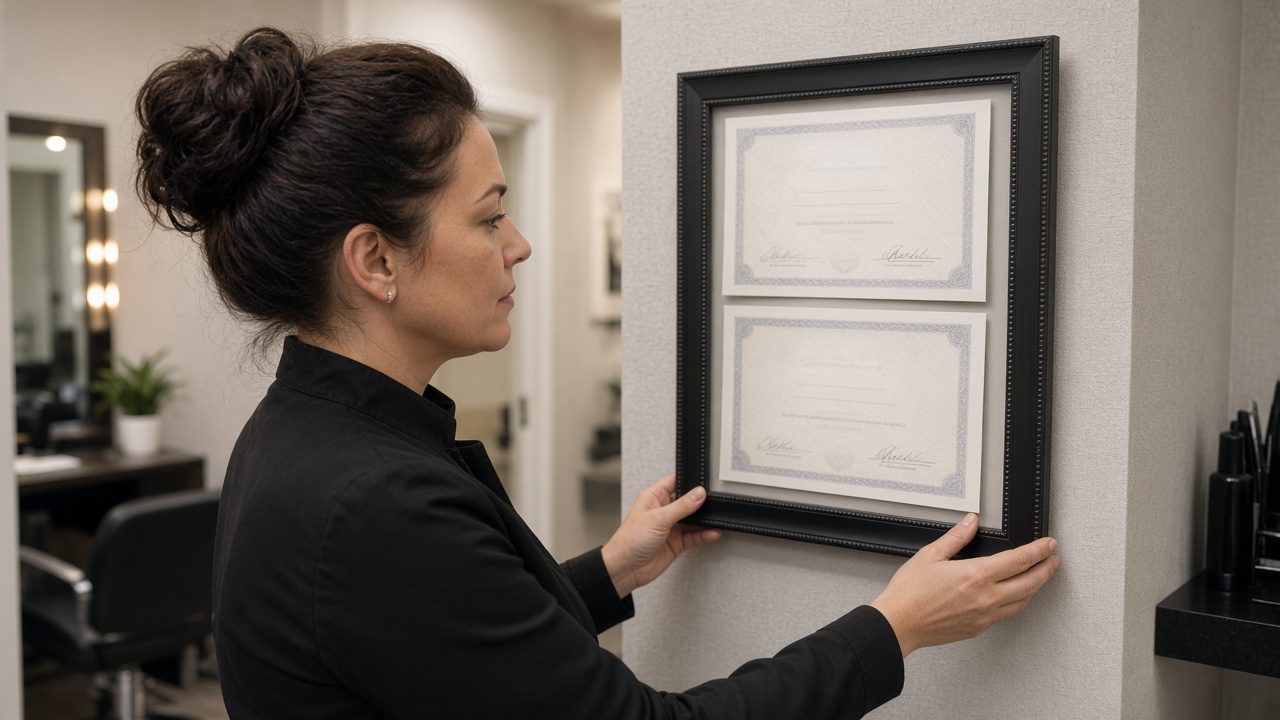
In addition to federal tax reporting, independent stylists encounter classification codes when registering for local municipal business permits, county tax certificates, and state cosmetology establishment licenses. While the federal government utilizes NAICS, state cosmetology boards issue specific establishment license numbers to ensure individual rooms comply with health and sanitation laws.
Before offering hair services in a private suite, state regulatory boards require operators to secure an independent salon or suite establishment license. Completing each step of the studio launch checklist ensures that your personal cosmetology practitioner license is active and that your physical styling suite passes local health inspections prior to opening.
Municipal tax departments frequently require independent beauty professionals to obtain a local business tax receipt, sometimes referred to as an occupational license. When completing municipal license applications, local authorities will request your primary NAICS code or choose from a municipal classification table that designates personal service establishments.
Municipal Zoning and Permitting Considerations
Securing municipal permits requires confirming that the commercial facility holds valid zoning approvals for beauty and personal care operations. In purpose-built salon suite complexes, master commercial zoning is typically secured by the property developer. However, as an independent tenant holding a business license, you must still register your individual business name with the city clerk.
Failure to register your private studio at the municipal level can lead to administrative fines or delays in receiving your certificate of occupancy. Taking time to register with local authorities ensures that your business operates legally and maintains good standing within your regional business community.
Tax Deductions Tied to Industry Classification
Classifying your enterprise under personal care services establishes your legal right to claim ordinary and necessary business expenses directly associated with cosmetology. Operating an independent hair suite requires significant ongoing investment in specialized consumable supplies, sanitation solutions, and professional continuing education.
Common deductible expenses for independent hair professionals include professional backbar supplies, retail inventory purchased for resale, disposable towels, cape sanitizing services, shears sharpening, and styling tool replacements. You may also deduct software subscription fees for client booking systems, merchant card processing fees, business liability insurance, and advertising expenses incurred to attract new clientele.
Maintaining separate business banking accounts is essential for substantiating these deductions. Commingling personal funds with business revenues creates accounting headaches and undermines the liability protections offered by limited liability company structures. Dedicated commercial accounts provide a clean paper trail that directly supports every line item reported on your annual tax return.
Depreciation of Styling Equipment and Furniture
When purchasing expensive capital equipment such as ergonomic hydraulic styling chairs, digital heat processors, or custom cabinetry, stylists can leverage federal depreciation provisions. Under Section 179 of the Internal Revenue Code, eligible small business owners can deduct the full purchase price of qualifying equipment in the year it is placed in service rather than depreciating it over multiple tax years.
Consulting with a certified public accountant or licensed tax professional who specializes in beauty industry clients ensures that you take advantage of all allowable depreciation deductions. Strategic asset depreciation significantly lowers your net taxable income during your first year of independent studio operation.
Step-by-Step Filing Checklist for Sole Proprietors
To ensure a smooth tax filing season, independent stylists should follow an organized administrative routine throughout the calendar year. Staying proactive with financial documentation eliminates tax-time stress and prevents costly omissions on your Schedule C return.
Begin by consolidating your quarterly revenue records, merchant processing 1099-K statements, and wholesale supply invoices. Compare your gross income against your operating expenses using accounting software or a structured financial ledger. Ensure that your six-digit industry code is recorded correctly on your tax preparation software before generating final filing documents.
Make timely quarterly estimated tax payments to both the federal government and state tax agencies. Self-employed individuals are responsible for paying self-employment taxes, which encompass Social Security and Medicare obligations, in addition to regular income taxes. Planning for these payments quarterly prevents painful lump-sum liabilities and penalties when filing annual returns in April.
Frequently Asked Questions
What is the standard NAICS business code for hair stylist operations?
The standard six-digit NAICS code for independent hair stylists and salon suite operators is 812112, which covers Beauty Salons. This universal commercial classification encompasses establishments primarily engaged in providing haircuts, coloring, styling, and chemical hair treatments.
Where do I enter the principal business activity code on Schedule C?
You enter the six-digit principal business activity code on Line B at the very top of IRS Form 1040 Schedule C. Entering 812112 signals to the Internal Revenue Service that your enterprise revenue derives from professional cosmetology and personal salon services.
Can using the wrong industry classification trigger an audit?
Using an incorrect or mismatched classification code can trigger automated processing flags if your reported business expense ratios diverge significantly from standard industry norms. Entering 812112 ensures your equipment, suite rent, and chemical supply deductions are evaluated against beauty industry benchmarks.
Do I need a separate code if I sell retail products in my salon suite?
You do not need a separate tax code if retail sales represent a secondary income stream to your core styling services. Federal tax guidelines advise business owners to report the single classification code that represents their primary source of gross annual enterprise earnings.