The salon suite vs booth rental decision centers on balancing higher monthly occupancy expenses against complete operational privacy, retail sales profits, and artistic control over your salon environment. While renting a booth offers a lower weekly financial threshold in an established multi-chair business, leasing a private suite grants total autonomy over pricing, schedule, and client ambiance.
Every beauty professional reaching career independence must evaluate their current client retention numbers, weekly service revenue, and desire for creative separation. Both models represent self-employed business structures where the stylist operates as an independent contractor rather than an employee. Developing a targeted salon suite business plan empowers practitioners to evaluate startup investments and pick the exact path that maximizes personal take-home earnings.
Before signing a long-term lease contract, stylists must review our comprehensive breakdown of salon booth rental agreements to understand baseline chair occupancy costs. Comparing these two models side by side reveals distinct operational advantages depending on your career stage and financial goals.
Comparing Weekly Overhead Expenses and Profit Margins
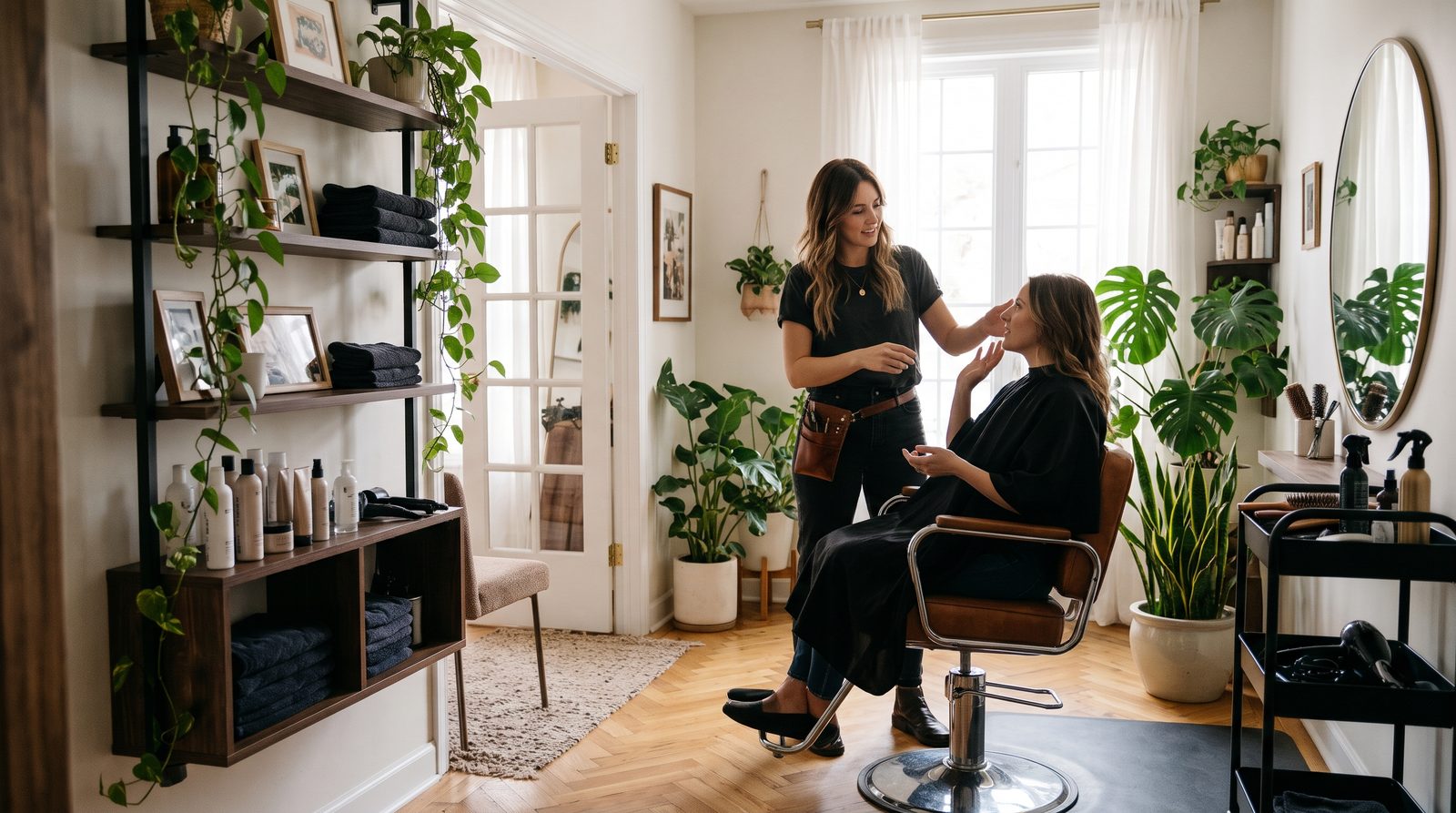
The most immediate difference between the two arrangements is the baseline weekly occupancy cost. Renting a traditional styling chair in an established open-floor salon generally ranges from one hundred fifty to three hundred dollars per week, depending on neighborhood demographics and salon reputation. In contrast, leasing a single private salon suite typically ranges from two hundred fifty to six hundred dollars per week.
While the private suite carries a higher weekly rent commitment, the profit potential per service hour is often significantly higher. Suite operators curate bespoke, boutique experiences that command premium service pricing without client pushback. Furthermore, suite owners keep all proceeds from retail product sales, whereas chair renters frequently forfeit retail revenue to the master salon owner.
When analyzing the booth rental vs salon suite dynamic, stylists who generate strong retail volume often find that extra retail profits completely bridge the gap in weekly rent expenses. Selling high-performance home care products directly to your loyal client base adds hundreds of dollars in high-margin revenue each month.
Fixed Booth Rent Versus Private Studio Lease Rates
A booth rental agreement typically covers shared access to a communal styling station, shared backwash shampoo bowls, waiting room seating, and standard salon utilities. Because overhead is shared among multiple stylists on the floor, the master salon owner can afford to offer accessible weekly rental rates.
Private suite leases cover a dedicated four-walled room equipped with private lockable doors, personal shampoo basins, custom cabinetry, styling chairs, and independent ventilation. The premium rent reflects the exclusivity of having a private commercial footprint dedicated entirely to your personal brand.
Retaining Full Retail Product Sales Margins
In traditional booth rental environments, salon owners usually prohibit individual stylists from bringing in outside retail lines that compete with salon dispensary shelves. Stylists receive only a modest commission check when their clients purchase products through the salon’s central register.
In a private studio suite, you operate as your own boutique retailer. You choose wholesale distributors, negotiate product discounts, and retain the entire thirty to fifty percent retail markup on every shampoo, mask, and styling cream sold to clients.
Client Experience and Acoustic Privacy Differences
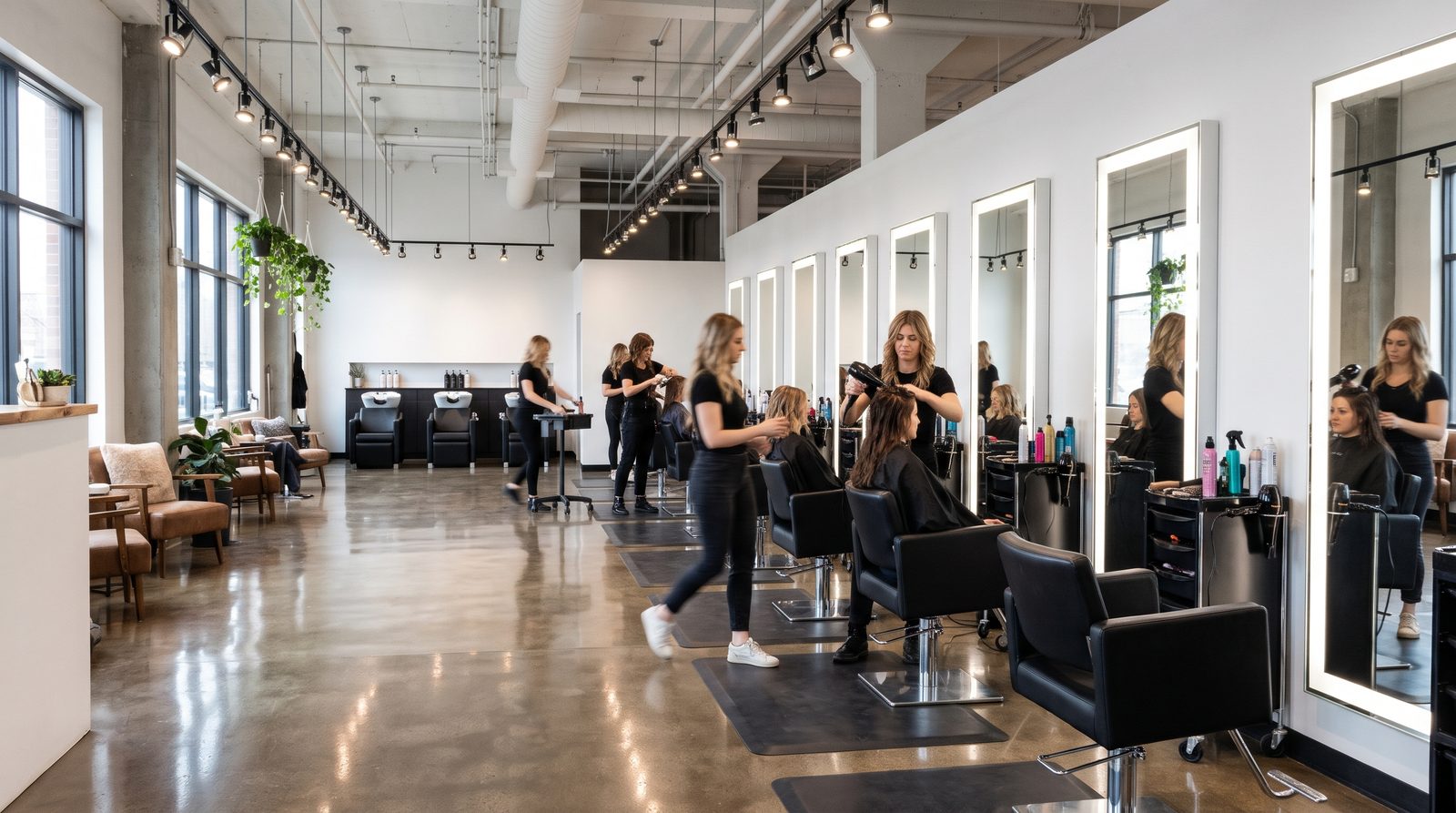
Client retention often hinges on the emotional comfort and relaxation delivered during appointments. Open-concept salon floors are frequently energetic and bustling, but they can also become overwhelmingly loud, chaotic, and lacking in personal privacy during busy afternoon shifts.
Clients with sensory sensitivities, busy professionals needing to take confidential work calls, or individuals experiencing medical hair loss often feel uncomfortable in open multi-chair environments. A private suite provides an acoustic sanctuary where client conversations remain strictly confidential behind closed doors.
Furthermore, independent operators can customize every sensory element inside their studio. You select the background playlist, adjust ambient temperature to client preference, diffuse calming essential oils, and offer personalized refreshments without conforming to blanket salon directives.
One-on-One Intimate Styling Atmosphere
In a private suite, client consultations occur without neighboring stylists or clients listening to personal hair histories and scalp concerns. This intimate dynamic fosters deep client trust, leading to higher client retention rates and larger average service tickets.
Stylists can conduct thorough scalp examinations, discuss postpartum thinning, or demonstrate home styling techniques without embarrassing the client in front of an audience of onlookers.
Eliminating Open Floor Salon Drama and Noise
Shared salon floors naturally develop social friction, ranging from competition over walk-in clients to disputes over untidy shampoo bowls and unwashed dispensary color bowls. Spending ten hours a day surrounded by workplace gossip drains creative energy and distracts from professional client service.
Leasing a private space inside a dedicated facility, as detailed in our guide on salon suite ownership, insulates you from salon drama, enabling you to focus entirely on creative excellence and business growth.
Business Autonomy and Schedule Flexibility

True operational freedom means controlling your working calendar, service menu offerings, and pricing structures without asking permission from a salon manager. While booth renters enjoy greater autonomy than commission employees, they must frequently conform to master salon operating hours and holiday closures.
Suite renters enjoy twenty-four-hour, seven-day-a-week keycard access to their private studios. This flexibility allows stylists to accommodate early-morning executive appointments, host late-evening weekend clients, or arrange specialized VIP weekend bridal sessions without building access restrictions.
Additionally, suite operators can freely expand their service menus to include complementary services such as lash extensions, facial waxing, or head spa treatments that a traditional hair salon owner might prohibit.
Customizing Studio Decor and Aesthetic Branding
In a booth rental setup, stylists are restricted to displaying a few personal tools within a standardized salon decor framework dictated by the owner. You cannot paint walls, change overhead lighting fixtures, or install custom branding signage.
Private suite leases encourage tenants to customize their rooms completely. You can paint accent walls, install luxury crystal chandeliers, hang branded neon signage, and curate an aesthetic that appeals directly to your target clientele.
Tax Responsibilities and Sole Proprietor Bookkeeping
Whether choosing chair rental or private studio leasing, cosmetologists operate as sole proprietors or single-member limited liability companies responsible for their own federal, state, and self-employment taxes. The IRS treats both booth renters and suite renters as independent business operators who must file Schedule C alongside Form 1040.
Official tax resources published by the IRS Independent Contractor Guidelines emphasize that independent workers must maintain operational control over their schedules, tools, and pricing. Independent stylists must calculate quarterly estimated tax payments to cover Medicare and Social Security contributions throughout the year.
Fortunately, business expenses incurred in both models are tax-deductible. Rental fees, styling shears, hair color inventory, laundering services, and professional liability insurance premiums directly reduce taxable net profit, as outlined in the IRS Self-Employed Individuals Tax Center.
Tracking Self-Employment Deductions and Schedule C Expenses
Managing a salon suite booth rental enterprise requires meticulous bookkeeping systems to track business mileage, continuing education tuition, and merchant processing fees. Utilizing dedicated business credit cards and bookkeeping software prevents mixing personal and business funds.
Evaluating salon suite vs booth rental finances requires analyzing your existing client retention rate and monthly take-home income projections. Stylists with tight profit margins may benefit from establishing lower overhead in a chair rental before transitioning to a full private studio.
Choosing the Right Career Path for Your Business Stage
Selecting the optimal business model depends on your accumulated industry experience, existing client following, and personal risk tolerance. Stylists who have recently relocated to a new city or who have less than two years of salon floor experience often benefit from the built-in foot traffic and lower weekly rent of a booth rental salon.
However, seasoned cosmetologists with eighty percent or higher client retention rates, strong word-of-mouth referral pipelines, and a passion for personalized client hospitality will find that leasing a private suite provides the ultimate platform for long-term career fulfillment and wealth creation.
When Traditional Chair Rental Makes Financial Sense
If your weekly gross service revenue remains under eight hundred dollars, committing to a high weekly suite lease places undue financial strain on your household. Renting a chair keeps occupancy costs predictable while you focus on aggressive client acquisition and marketing.
Once your gross weekly service earnings consistently surpass twelve hundred to fifteen hundred dollars, transitioning into a private suite becomes a natural, profitable, and liberating career milestone.
Frequently Asked Questions
Is leasing a private suite more expensive than renting a chair?
Yes, private studio suites typically cost fifty to one hundred percent more per week than traditional booth rentals. However, studio owners retain one hundred percent of retail sales margins and can charge premium rates for private, quiet appointments.
Can independent booth renters sell their own retail hair products?
In most traditional salons, the master salon owner controls the retail shelves and pays booth renters a modest ten to fifteen percent commission on retail sales. In contrast, suite renters keep full retail profits from any product lines they choose to stock.
How many steady weekly clients are needed for a private studio?
Stylists generally need twenty to thirty recurring weekly clients and solid client retention before moving to a private suite. Beginning with an established clientele prevents financial stress from higher weekly commercial occupancy leases.
Does commercial suite rent include utilities and equipment?
Most commercial salon suite buildings include water, electricity, high-speed Wi-Fi, styling chair, and shampoo backwash unit in the weekly rent. Booth rentals often include basic utilities as well, but provide less control over ambient climate, music, and lighting.