Owning a salon suite building allows ambitious beauty professionals to transition from individual service providers to commercial real estate landlords who collect steady rental income from multiple independent stylist tenants. By purchasing a freestanding commercial property or small retail strip center, an owner creates long-term property equity while building an upscale environment tailored specifically to beauty practitioners.
Operating as a commercial facility owner eliminates the vulnerability of relying solely on personal physical labor behind a styling chair. Instead of trading hours for service fees, a suite building owner establishes a scalable business model that produces predictable weekly rent payments from ten, twenty, or even thirty independent beauty specialists. Developing a thorough salon suite business plan provides the exact financial foundation required to acquire land, secure construction permits, and successfully launch a multi-unit facility.
Prospective developers must evaluate whether purchasing existing commercial retail space or executing an adaptive reuse buildout delivers the best return on investment. As documented in our guide to renting a salon suite, demand for private styling spaces remains remarkably high as cosmetologists flee traditional commission models in search of autonomy.
Commercial Real Estate Investment and Equity Growth
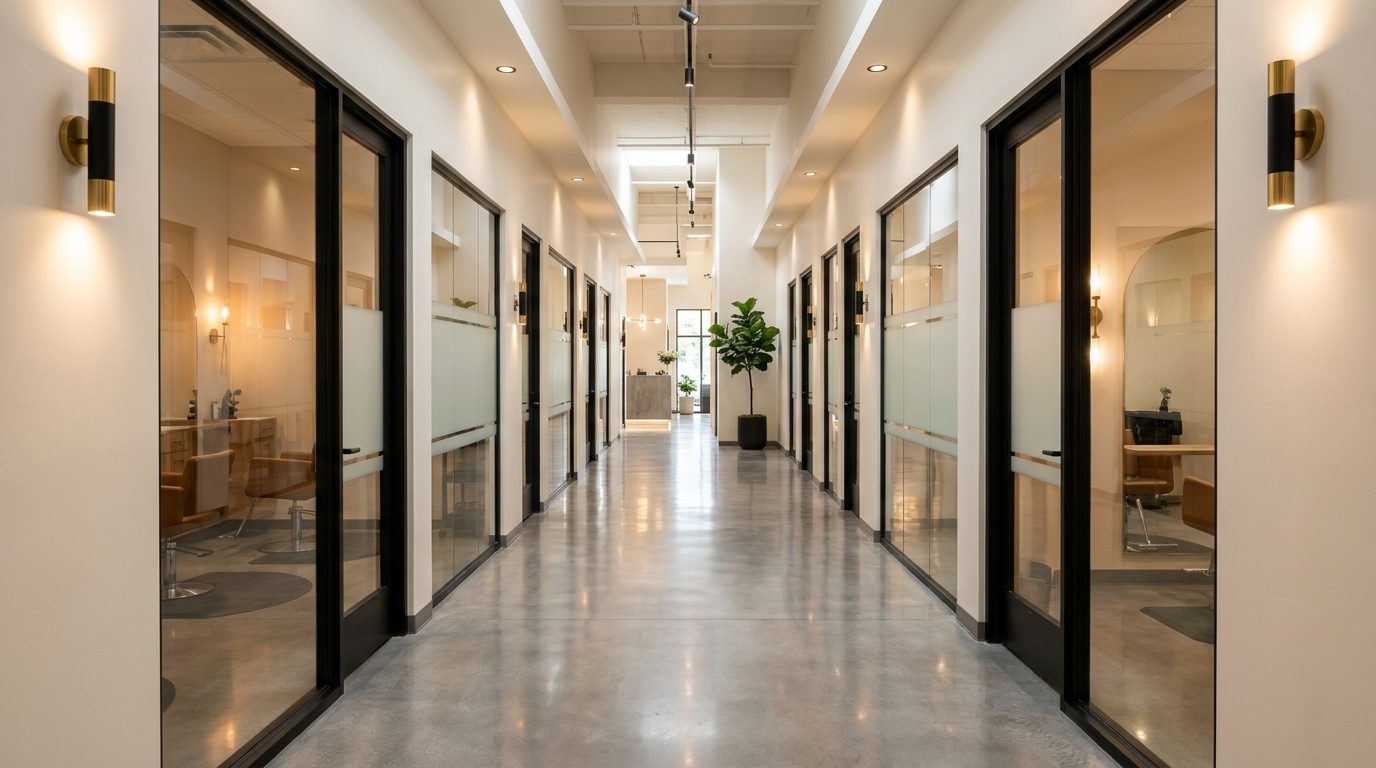
Investing in commercial real estate offers dual revenue mechanics that residential or single-suite operations cannot replicate. First, the property generates immediate monthly operational cash flow after debt service and ongoing maintenance expenses. Second, the underlying physical asset appreciates over time while tenant lease payments systematically amortize the commercial mortgage principal.
Federal lending initiatives documented by the SBA 504 Loan Program allow small business owners to acquire owner-occupied commercial real estate with as little as ten percent equity down. This unique financing vehicle provides long-term, fixed-rate debt designed specifically for facility acquisitions, protecting entrepreneurs from unpredictable lease spikes imposed by third-party commercial landlords.
Furthermore, commercial property owners benefit from significant federal tax deductions, including structural depreciation schedules and cost segregation studies that accelerate write-offs for specialized salon improvements. Capital expenditures on plumbing manifolds, electrical panel upgrades, and custom cabinetry can often be depreciated over shorter recovery horizons, shielding operational cash flow from excessive income taxes.
Transitioning From Solo Stylist to Facility Landlord
Stepping into the role of a commercial property landlord requires shifting focus from client hair appointments to building operations, facility leasing, and community management. Successful suite owners often retain a private studio inside their building to serve select clientele while dedicating designated days each week to building administration, marketing vacant units, and overseeing property contractors.
This dual operational structure creates remarkable financial stability. The revenue generated by tenant booth rents covers the entire commercial mortgage and facility overhead, effectively granting the owner a completely free personal studio space alongside substantial secondary rental profits.
Long-Term Commercial Property Appreciation
Commercial properties located in thriving suburban retail corridors or dense urban neighborhoods enjoy consistent capital appreciation driven by population growth and commercial density. Upgrading a neglected retail building into a luxury beauty destination dramatically enhances the property’s capitalized asset valuation.
When an owner eventually decides to retire from active management, the fully leased property can be held as an income-producing asset managed by a professional real estate agency, or sold at an attractive capitalization rate to commercial property investors.
Plumbing and Electrical Infrastructure Requirements
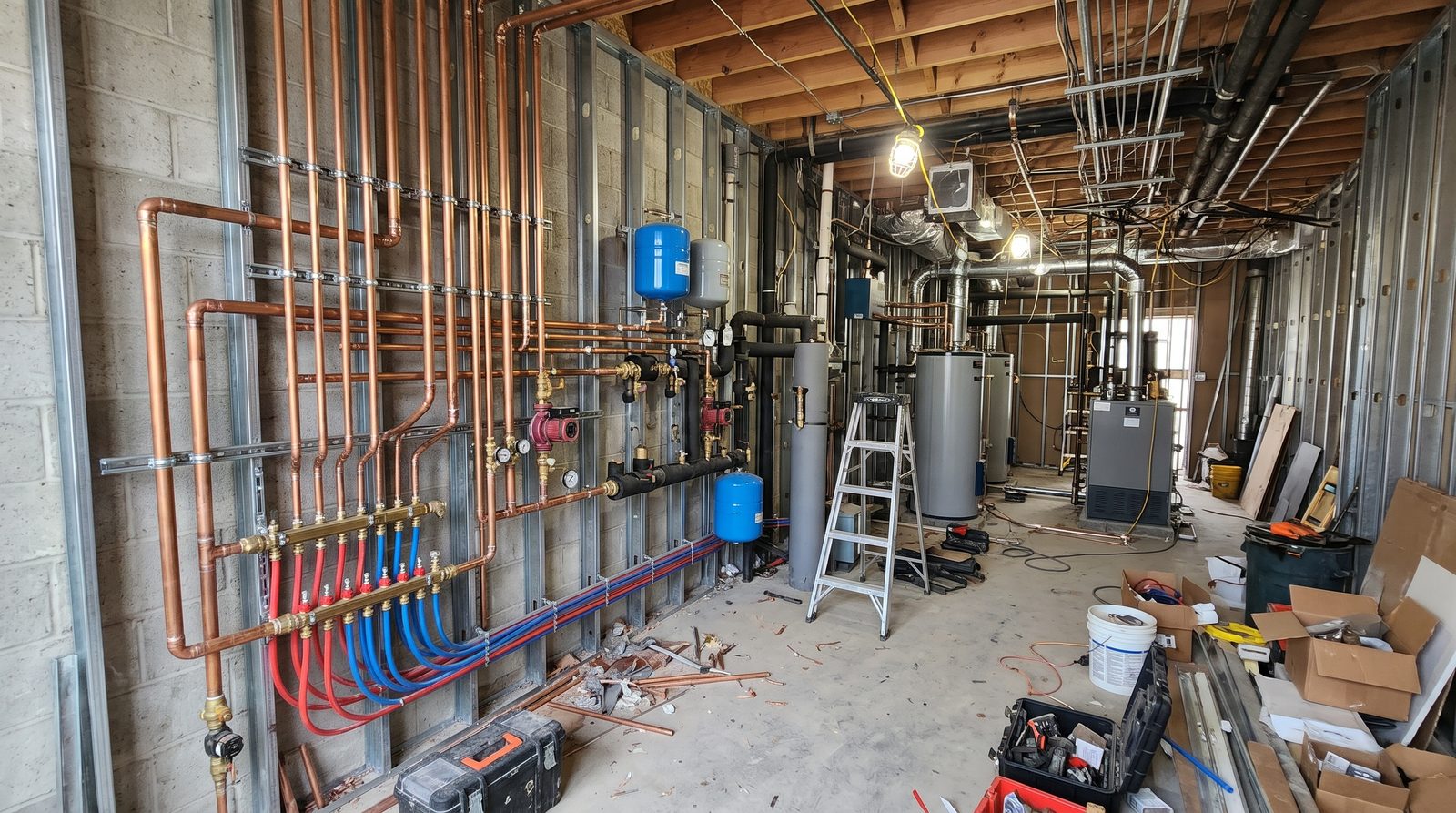
The mechanical, electrical, and plumbing engineering represents the single most complex and expensive component of constructing a salon suite building. Traditional office buildings or retail stores are engineered for modest water usage and basic electrical loads, whereas a twenty-suite beauty collective functions effectively as a mini-utility plant operating dozens of high-draw appliances simultaneously.
Every private suite requires dedicated hot and cold water supply lines, sanitary drainage with adequate venting, and access to commercial-grade hair filtration traps to prevent catastrophic sewer blockages. Installing an undersized main water line or inadequate municipal sewer hookup can result in sluggish drainage, fluctuating water pressure, and dissatisfied tenant stylists.
Additionally, electrical demands in beauty facilities are exceptionally dense. Cosmetologists run multiple high-wattage hair dryers, curling irons, processing hoods, and climate control units continuously throughout peak business hours. Each studio suite must be wired with multiple dedicated twenty-amp circuits to prevent tripped breakers during demanding color and styling appointments.
Water Heater Sizing and Backwash Shampoo Bowls
Commercial salon facilities cannot function with standard residential water heaters. A building with fifteen to twenty shampoo bowls requires heavy-duty commercial tankless water heater arrays or high-recovery commercial boilers capable of supplying continuous one-hundred-twenty-degree water during Saturday morning surges.
Integrating recirculating hot water loops ensures that hot water arrives instantly at every tenant’s shampoo bowl the moment a faucet is opened. Failing to install recirculating pumps leads to long wait times, excessive municipal water waste, and frustrated clients shivering in styling chairs.
Electrical Circuit Distribution for Hair Appliances
Professional blow dryers routinely consume eighteen hundred watts of power each, quickly maxing out shared electrical circuits. Facility blueprints must specify isolated circuits for styling station receptacles, separate dedicated circuits for processing hoods, and independent lines for studio HVAC mini-split units.
Engineers must carefully calculate the master electrical service entrance sizing, often requiring a commercial four-hundred to eight-hundred-amp three-phase electrical panel upgrade from the local power utility before commencing interior framing.
Financing Commercial Real Estate and Construction Loans

Securing capital for a multi-unit commercial salon development involves obtaining a commercial acquisition and construction loan that transitions into permanent mortgage financing upon project completion. Lenders evaluate both the personal creditworthiness of the developer and the realistic revenue projections outlined in the developer’s comprehensive hair salon business plan.
Commercial loan underwriters scrutinize local market suite rental rates, regional beauty professional density, and the borrower’s available liquid reserves for unexpected construction cost overruns. Having pre-lease commitments or letters of intent signed by licensed local cosmetologists significantly strengthens the loan application, demonstrating verified commercial demand to cautious bank loan committees.
Borrowers must also prepare comprehensive financial statements, including personal balance sheets, three years of federal tax returns, and detailed architectural estimates provided by licensed general commercial contractors.
Navigating SBA 504 Real Estate Loan Programs
The Small Business Administration 504 loan structure pairs a conventional first mortgage from a commercial bank with a subordinate debenture from a Certified Development Company, backed by the federal government. This structure minimizes the entrepreneur’s upfront cash injection while providing long-term interest rate stability.
Entrepreneurs can finance eligible soft costs, including architectural drafting fees, environmental phase-one assessments, and permanent plumbing fixtures directly into the master loan balance, preserving crucial working capital for opening marketing campaigns.
Tenant Management and Studio Lease Structuring
A thriving salon suite facility depends on cultivating a community of reliable, professional, and licensed beauty entrepreneurs. Facility owners must draft clear commercial sublease agreements that establish precise tenant rules, operating hours, sanitation standards, and noise guidelines across the communal building.
Commercial lease covenants should require every tenant cosmetologist to maintain valid state board licenses and hold individual general and professional liability insurance policies naming the building entity as an additional insured. This legal insulation protects the master property owner from liability arising from client chemical burns, slips, or individual tenant malpractice.
Implementing digital property management portals simplifies weekly rent collection by automating recurring ACH bank withdrawals, logging maintenance tickets, and sending automated building announcements to all suite occupants.
Weekly Lease Agreements and Security Deposits
In the beauty industry, suite rentals are conventionally structured around weekly lease payments rather than traditional monthly corporate rent schedules. Weekly billing aligns perfectly with stylist cash flows, making occupancy payments manageable while providing the facility landlord with consistent weekly cash inflow.
Owners typically collect a security deposit equal to two weeks of rent, along with the initial week’s rent in advance, before handing over studio keys to a new tenant practitioner.
Operating Expenses and Facility Maintenance Budgets
Carefully budgeting for ongoing operational expenses ensures the facility remains clean, mechanically sound, and financially solvent throughout economic shifts. Primary operating costs include commercial property taxes, building property insurance, master water and sewer utility bills, common area high-speed internet, and contracted evening janitorial services for shared restrooms and hallways.
Tax guidelines published by the IRS Guide on Deducting Business Expenses highlight that routine commercial property maintenance, janitorial supplies, utility bills, and commercial mortgage interest constitute fully deductible operating costs on federal tax returns. Maintaining meticulous digital receipts and dedicated commercial bank accounts ensures compliant recordkeeping and maximizes available operating write-offs.
Successfully owning a salon suite building requires budgeting for recurring utility overhead, janitorial contracts, and general building repairs. Establishing a dedicated capital expenditure reserve fund helps cover unexpected mechanical replacements, such as commercial water heaters or rooftop HVAC compressors, without disrupting monthly operational profits.
Frequently Asked Questions
Is owning a commercial salon suite facility profitable?
Yes, operating a multi-tenant salon suite building generates substantial gross margins once occupancy exceeds seventy percent. Studio landlords collect steady weekly rental payments while building long-term commercial real estate equity.
What commercial loans finance salon suite property purchases?
Entrepreneurs frequently utilize the SBA 504 loan program to purchase and renovate commercial salon properties with ten percent down payments. Conventional commercial mortgages and local portfolio lenders also provide financing for established cosmetologists.
How many individual studio suites are needed to break even?
Most commercial facilities require ten to fifteen individual studios to comfortably cover monthly mortgage payments, property taxes, common utilities, and management expenses. Larger facilities with twenty or more suites produce significantly higher net cash flows.
Who handles maintenance inside tenant salon suites?
The commercial facility landlord maintains exterior structures, roof integrity, common HVAC systems, and master plumbing lines up to the suite connection. Individual tenant stylists remain responsible for their personal interior decor, specialty equipment, and daily station sanitation.