Establishing a transparent black hair services price list enables professional cosmetologists to charge accurately for extensive service durations, advanced technical expertise, and premium textured hair products. Because natural hair care, intricate protective braiding, and precision silk press services demand significant manual labor and customized scalp care, setting clear baseline rates ensures profitable and sustainable studio operations.
Textured hair styling involves sophisticated techniques that require hours of meticulous physical execution. Cosmetologists transitioning into independent suites must price their services based on time, product consumption, and specialized knowledge rather than copying low-cost competitor rates. Incorporating these pricing principles into your overall salon suite business plan guarantees that your private studio maintains healthy operating margins.
Stylists should review our foundational guide on how to price hair services to learn how to determine hourly labor requirements before publishing finalized menu rates.
Core Hair Styling Rates and Service Duration Benchmarks
Pricing natural hair care requires moving away from flat-rate models toward structured packages that reflect the true time required for detangling, cleansing, deep moisture steaming, and thermal pressing. Below is an industry benchmark price chart representing average rates across professional private salons and independent suites:
| Service Category | Typical Price Range | Average Duration | Included Treatments |
|---|---|---|---|
| Silk Press & Steam Hydration | $85 – $150 | 90 – 120 mins | Clarifying wash, deep hydration mask, trim, thermal press |
| Starter Locs (Comb Coils / Twists) | $120 – $220 | 120 – 180 mins | Consultation, grid parting, locking gel, hooded dry |
| Loc Retwist & Basic Style | $95 – $160 | 90 – 150 mins | Scalp wash, palm roll retwist, barrel rolls or two-strand style |
| Knotless Braids (Medium Mid-Back) | $220 – $350 | 4 – 6 hours | Shampoo, blow dry, parting, hair included, dipped ends |
| Feed-In Cornrows (4 – 8 Braids) | $90 – $160 | 90 – 150 mins | Cleansing wash, blowout, edge control precision parting |
| Traditional Sew-In with Leave-Out | $175 – $275 | 2.5 – 3.5 hours | Braid foundation, net placement, track installation, style |
| Virgin Relaxer & Style | $110 – $180 | 120 mins | Scalp base, chemical application, neutralizing wash, deep condition |
Health and safety standards established by the OSHA Hair Salons Safety Guide emphasize that thermal styling tools and chemical relaxers require proper ventilation, heat regulation, and scalp barrier protections to prevent thermal burns or chemical contact dermatitis. Investing in high-performance ceramic irons and scalp protectants justifies premium service pricing.
Clear service benchmarks allow clients to book appointments with confidence, knowing exactly what treatments are included within the base service fee. Reviewing our salon service menu template helps you design appealing visual menus that communicate these benchmarks clearly.
Silk Press and Deep Conditioning Treatments
A luxury silk press is far more than a simple flat iron appointment. It is an intensive healthy hair regimen that restores elasticity, infuses hydration, and seals cuticles without causing heat damage. Stylists incorporate clarifying treatments to remove product buildup, followed by twenty minutes under a warm hydration steam cap.
Thermal styling requires applying professional silicone-based heat protectants before blow drying with directional tension nozzles. Finishing with single-pass ceramic pressing creates bouncy, lightweight silk presses that last for weeks under proper home maintenance.
Loc Retwists and Interlocking Maintenance
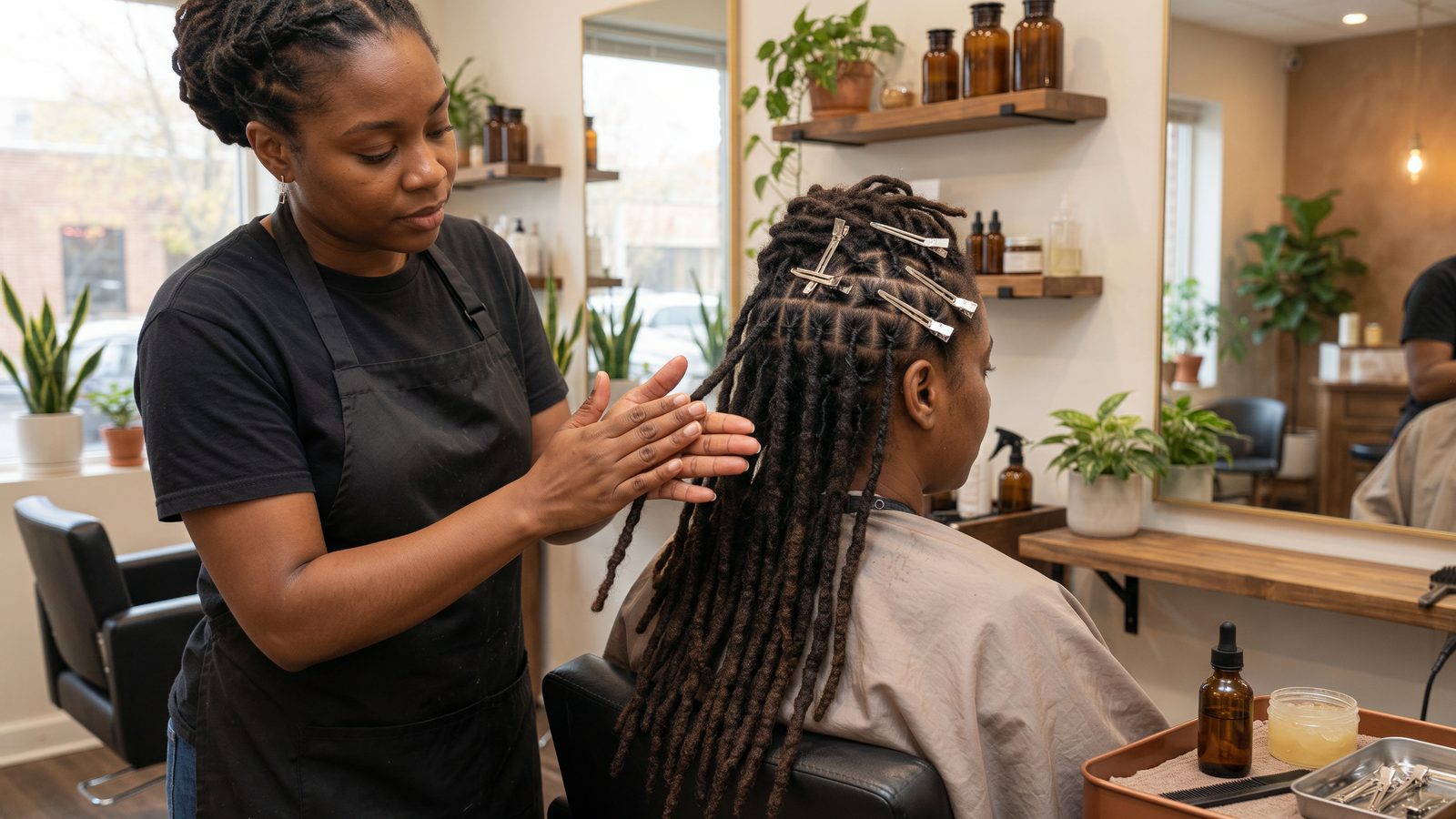
Loc maintenance pricing must differentiate between basic palm-rolling and specialized interlocking techniques. Palm-rolling retwists are suitable for clients booking consistent four-to-six-week maintenance, whereas interlocking uses specialized tools to tighten roots, requiring greater technical precision and higher pricing.
Stylists should offer clarifying apple cider vinegar detox soaks as an optional add-on service to remove lint and build-up from mature locs, generating additional high-margin service revenue.
Protective Braiding and Extension Price Guidelines
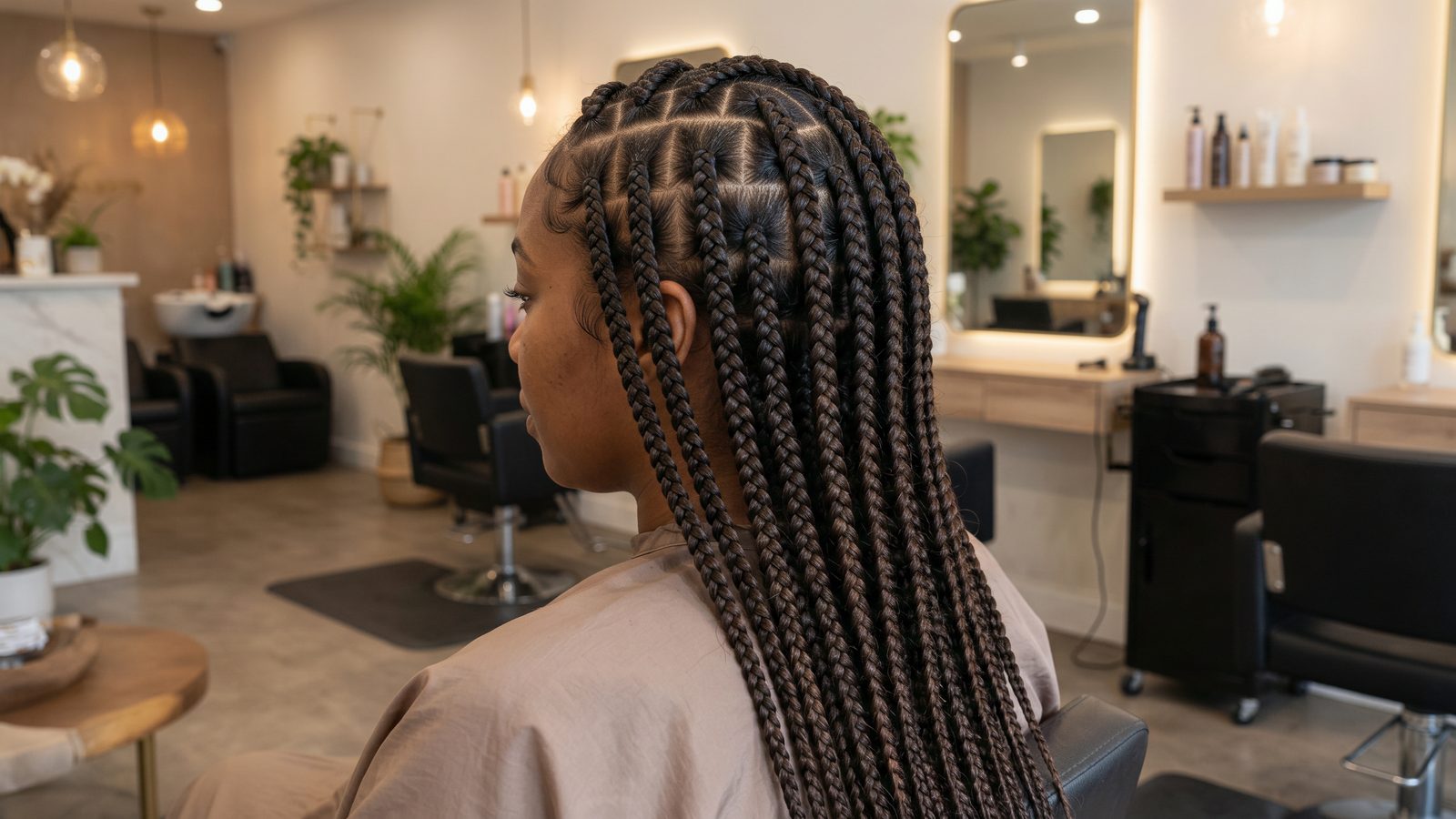
Protective braiding represents one of the most physically demanding service categories in the beauty industry. Standing for five to eight hours executing intricate, uniform parts and tension-free knotless braids exerts considerable physical strain on a stylist’s wrists, back, and fingers.
Stylists must establish pricing that yields an acceptable hourly wage after deducting product costs. If a knotless braiding service requires five hours to complete, charging two hundred fifty dollars yields fifty dollars per gross hour before overhead. Offering hair-included packages streamlines appointment preparations and guarantees the use of high-quality pre-stretched hypoallergenic braiding hair.
Sew-in weave installations and microlink extension services command higher price points due to the advanced technical skill required to sew wefts onto flat braid foundations or attach individual silicone-lined beads without stressing client natural hair follicles.
Knotless Box Braids and Feed-In Cornrows
Knotless braids have largely replaced traditional knotted box braids because they place significantly less tension on delicate edges and natural roots. Because the technique involves feeding in small strands of synthetic hair gradually, it requires greater skill and time, justifying higher service fees.
Feed-in cornrows offer clients sleek, low-maintenance protective styling for athletic activities or vacations. Pricing should be tiered based on the number of individual braids, with small designer parts commanding higher rates than classic straight-back rows.
Traditional Sew-Ins and Microlink Extensions
Weave installations require precision braiding patterns that distribute weight evenly across the scalp. Stylists incorporate protective mesh nets to reinforce the foundation, extending installation longevity and allowing clients to wash their scalps comfortably.
Microlink and tape-in extensions cater to clients seeking versatile natural hair enhancement with seamless blend. These luxury services command three hundred to six hundred dollars in labor fees, excluding the cost of virgin human hair bundles.
Chemical Texture and Scalp Restoration Services
Chemical relaxers, texturizers, and keratin smoothing treatments remain vital components of comprehensive textured hair menus. Providing chemical texture alteration requires meticulous chemical understanding, strict timing, and thorough scalp basing to prevent irritation.
Virgin relaxer applications require substantial time and product to coat untreated hair evenly from root to tip, whereas routine relaxer retouches focus solely on newly grown roots. Neutralizing washes must be executed with pH-balanced formulas that completely halt chemical processing before deep bond-building masks are applied.
Scalp restoration treatments represent another rapidly growing revenue stream. Stylists utilize high-frequency electrical therapy combs, exfoliating scalp scrubs, and organic botanical oils to soothe dandruff, psoriasis, and tension alopecia.
Virgin Relaxers and Chemical Retouch Pricing
Chemical pricing should always include the mandatory neutralizing shampoo, deep protein conditioning treatment, and basic blowout styling. Bundling these necessary steps into a single transparent price prevents client confusion at checkout.
If a client requires a post-chemical haircut or custom toner to blend colored ends, these services should be priced as distinct add-on options clearly displayed on your booking menu.
Calculating Hourly Labor and Specialty Product Costs
Setting sustainable service prices requires calculating your true cost of doing business. You must factor in private suite lease rent, liability insurance, software fees, laundered towel costs, and premium textured hair products. High-grade deep conditioners, slip detanglers, and edge control pomades represent substantial supply expenses.
Business budgeting principles outlined in the SBA Financial Management Guide highlight that business owners must track direct material costs and calculate gross profit margins across every service category. If a specialty moisture mask costs eight dollars per application, that expense must be factored directly into service menu pricing.
Publishing an up-to-date black hair services price list on your booking portal sets clear expectations and prevents payment misunderstandings. When clients understand the high level of care, premium products, and intense manual labor involved, they gladly invest in your professional styling services.
Accounting for Premium Moisture Treatments and Clarifying Washes
Textured hair requires intense moisture replenishment using products formulated with natural plant butters, hydrolyzed proteins, and essential fatty acids. Utilizing high-end professional backbar lines increases client satisfaction but elevates operational supply overhead.
Stylists should track backbar inventory usage and adjust service pricing whenever product distributors raise wholesale prices, preserving healthy profit margins throughout the year.
Structuring Price Policies for Length, Density, and Takedowns
One of the most common pitfalls natural hair stylists encounter is failing to charge for extreme hair density or length. An appointment budgeted for ninety minutes can easily stretch to three hours if a client presents waist-length hair that has not been detangled for weeks.
Service policies must clearly state that baseline prices apply to standard shoulder-length hair of average density. Menu descriptions should explicitly note add-on fees for extra length (bra strap, mid-back, waist-length) and matted detangling labor charged at fifteen-minute increments.
Furthermore, offering professional protective style takedown services prevents clients from breaking off their own ends with improper scissors. Charging seventy-five to one hundred dollars for takedown, gentle detangling, and restorative washing delivers a valuable service that preserves client hair integrity.
Add-On Fees for Extra Length and Matted Detangling
Clear communication is critical when assessing density add-ons. Conduct a thorough dry consultation upon client arrival, point out matted sections, and quote the exact detangling surcharge before washing begins.
Documenting these policies on your booking website and confirmation emails establishes professional accountability and protects your daily styling schedule from unexpected delays.
Frequently Asked Questions
What is the average cost of a professional silk press?
A professional silk press typically ranges from eighty-five to one hundred fifty dollars depending on client hair length, density, and included deep conditioning treatments. The service includes clarifying wash, intensive hydration steam treatment, blow dry, and precision thermal flat iron styling.
How are knotless braiding prices calculated by stylists?
Knotless braiding rates depend on braid size, parting precision, finished length, and overall appointment duration, ranging from one hundred eighty to over four hundred dollars. Experienced stylists factor in three to eight hours of skilled manual labor when establishing baseline prices.
Should shampoo and blow dry be included in braiding prices?
Yes, high-end independent stylists include a thorough cleansing shampoo, moisturizing treatment, and blow dry preparation directly within their full service braiding fee. Bundling prep services guarantees clean, detangled hair that yields neat parts and durable protective styles.
Why do stylists charge extra for hair density and length?
Dense or extra-long hair requires significantly more styling product, additional blow drying time, and extended thermal pressing or braiding labor. Transparent menu add-on policies ensure stylists receive fair compensation for the extra physical effort and product costs.