Deciding to leave commission-based employment and step into independent business ownership is a defining crossroads for hair stylists. When evaluating your independence options, renting a salon suite represents one of the fastest-growing paths to total autonomy in the modern beauty industry. A private suite allows you to build an intimate, personalized sanctuary for your clients, set your own service hours, and capture one hundred percent of your service revenue without sharing profits with a salon owner.
However, leasing a private studio also means assuming full responsibility for commercial overhead, utility charges, retail stocking, and business liability. Stylists must navigate complex lease agreements, understand hidden facility expenses, and realistically assess their client retention numbers before signing a commercial contract. Transitioning without clear financial preparation can quickly turn an exciting opportunity into an overwhelming financial burden.
Before committing to a multi-month lease, integrating your rental projections into a comprehensive salon suite business plan gives you the numbers needed to evaluate affordability. Federal tax guidelines outlined by the IRS Self-Employed Individuals Tax Center remind independent contractors and booth renters that business overhead directly offsets gross income, underscoring the critical necessity of tracking every business expense from day one. Understanding your net margins ensures that your move into private suite ownership delivers genuine financial freedom.
Choosing the right location, landlord, and studio footprint requires looking far beyond aesthetic paint colors and trendy light fixtures. By conducting thorough due diligence on commercial lease agreements, utility allocations, and facility amenities, you can protect your working capital and create an exceptional environment where both you and your clients thrive.
Financial Realities of Private Salon Spaces
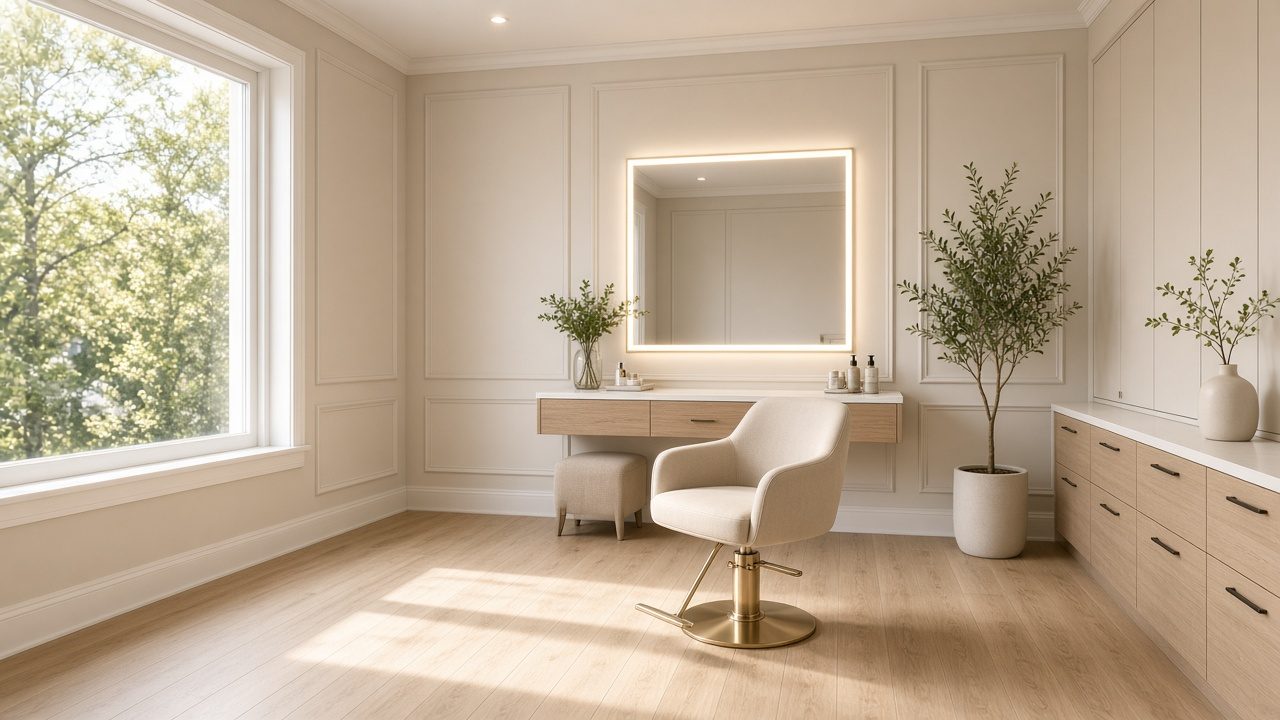
The core financial appeal of private suite leasing is replacing unpredictable commission splits with a fixed, predictable weekly or monthly lease payment. In a traditional commission salon, earning ten thousand dollars in service revenue often leaves you with just five thousand dollars after the salon owner deducts their fifty percent cut. In a private suite, that same revenue remains entirely yours after paying your fixed rent and product expenses.
Fixed Weekly Overhead and Break-Even Calculations
However, fixed overhead cuts both ways. Your weekly lease payment remains due whether you work forty hours or take a week off for illness or vacation. In addition to base rent, stylists must budget for merchant processing transaction fees, professional cosmetology liability insurance, broadband internet access, backbar shampoo and color supplies, and statutory self-employment taxes. Maintaining an emergency buffer equal to at least two months of operating expenses protects your business during seasonal appointment slowdowns.
Stylists must also account for initial security deposits and key fees. Most commercial suite landlords require a refundable deposit equivalent to one or two months of rent upon lease signing. Factoring these upfront outlays into your cash flow forecast ensures you do not exhaust your savings before welcoming your first client through the door.
When properly budgeted, a private suite consistently yields significantly higher net profit margins than commission employment. By monitoring your weekly break-even numbers and maintaining rigorous expense tracking, you retain command over your business finances and can reinvest profits into advanced education and premium styling tools.
Evaluating Studio Suite vs Booth Rental Options

When transitioning toward independence, stylists frequently weigh the operational pros and cons of a salon suite vs booth rental arrangement. In a traditional booth rental model, you lease a single chair inside an open-concept salon floor. While booth rental often features lower weekly rent and allows you to socialize with fellow stylists, it also exposes you and your clients to salon noise, competing music choices, shared shampoo bowls, and potential salon drama.
Client Privacy and Salon Safety Standards
Conversely, a private salon suite provides complete sensory control and absolute client privacy. Clients who receive lengthy chemical treatments, hair restoration services, or sensitive scalp therapies often strongly prefer the quiet, one-on-one atmosphere of a private studio. This enhanced privacy allows suite operators to position themselves as boutique specialists and command premium service pricing that clients readily accept.
On the operational side, workplace health and chemical handling protocols must be maintained diligently in private suites. Compliance guidelines provided by the OSHA Hair Salons Safety Guide emphasize that adequate air ventilation, proper chemical disposal, and clean sanitation practices are mandatory when working with hair lighteners, keratin treatments, and permanent waving solutions in enclosed studio spaces. Ensuring your private suite offers robust mechanical ventilation protects your long-term health.
Ultimately, the choice between a suite and a booth rental chair hinges on your personal brand vision. If you value complete creative privacy, customized decor, and curated musical ambiance, a private suite represents the superior long-term vehicle for your career.
Understanding Rental Costs and Studio Overhead

Analyzing baseline booth rental cost parameters alongside private suite rates provides essential clarity during your property search. In most mid-sized American markets, traditional chair rental ranges from one hundred fifty to three hundred dollars per week, whereas a private salon suite typically ranges from two hundred fifty to six hundred dollars weekly depending on square footage, window placement, and geographical market.
When comparing rental rates, looking strictly at the base rent figure can be dangerously misleading. Some suite operators offer an all-inclusive rental rate that incorporates water, electric utilities, high-speed Wi-Fi, laundry facilities, and common area janitorial maintenance into one predictable fee. Other landlords offer seemingly lower base rent but bill separately for individual utility meters, commercial trash disposal, and shared hallway maintenance.
Here is an itemized breakdown of common recurring studio overhead expenses you must anticipate:
- Weekly Studio Lease: Fixed rental fee covering your private square footage and building amenities.
- Cosmetology Liability Insurance: Professional and general liability insurance policies protecting against client injuries, chemical reactions, or property damage.
- Merchant Processing Charges: Credit card terminal fees and transaction processing rates, typically two point six percent plus ten cents per transaction.
- Laundry and Linens: Commercial laundry service fees or on-site laundry machine usage for sanitizing client towels and styling capes.
- Backbar Chemical Inventory: Wholesale hair color lines, developers, bond builders, foils, shampoos, and conditioners replenished bi-weekly.
Calculating your cost per client service allows you to price appointments accurately. By understanding exactly how much overhead is absorbed by each haircut or balayage service, you protect your bottom line from creeping inflation.
Reviewing Salon Rules and Studio Lease Agreements

Before placing your signature on any binding commercial contract, reviewing both property guidelines and traditional booth rental salon rules protects your operational autonomy. In some poorly managed booth rental salons, owners attempt to impose employee-like restrictions on renters—such as mandating specific working hours, dictating retail brands, or demanding dress codes—which violates IRS independent contractor classifications.
Lease Terms and Property Access Guidelines
When leasing a private salon suite, you are a commercial tenant entitled to clear contractual rights. Carefully examine the lease duration, renewal options, and early termination penalties. Many landlords require twelve-month or twenty-four-month leases with steep financial penalties if you need to vacate early. Negotiating a trial lease period or seeking a six-month initial term can provide valuable peace of mind while establishing your new location.
Additionally, examine building access provisions. Does the facility provide twenty-four-hour secure access seven days a week, allowing you to accommodate early morning or late evening client requests? Verifying secure keycard access, functional security cameras in common corridors, and well-lit parking lots ensures you and your clients feel safe at all times.
Review the landlord’s policy regarding studio alterations. Can you paint the walls your brand colors, hang customized shelving, or install specialty chandeliers without forfeiting your security deposit? Knowing the restoration requirements upon lease completion avoids unexpected deductions when your tenancy concludes.
Studio Lease Checklist and What to Inspect Before Signing

To avoid costly surprises, compile a definitive inspection checklist covering all prospective lease costs and what to check before finalizing your studio agreement. Never tour a property without inspecting the physical plumbing infrastructure. Run the hot water at the shampoo station to verify adequate water pressure, rapid hot water recovery, and effective drainage. Inadequate hot water during peak Saturday appointment hours can cripple your service schedule.
Evaluate acoustic insulation between neighboring suites. While complete soundproofing is rare in commercial properties, walls should sufficiently muffle conversation, blow dryer noise, and background music from adjacent studios. If a neighboring suite specializes in energetic services or loud music, it could negatively impact a relaxing client experience in your space.
Inspect the electrical outlet layout and circuit capacity. Professional blow dryers, hooded processors, and flat irons draw substantial electrical current. Verify that your styling station has dedicated twenty-amp circuits that will not trip breakers when running multiple heat tools simultaneously. Having accessible outlets positioned close to your styling chair eliminates hazardous extension cords across the floor.
By approaching the process of renting a salon suite with meticulous financial scrutiny and thorough lease evaluation, you position your independent business for steady profitability. Taking command of your physical work environment allows you to deliver exceptional client transformations while building equity in a brand that belongs entirely to you.
Frequently Asked Questions
What are the primary overhead expenses when leasing a studio?
Key overhead expenses include weekly studio rent, commercial liability insurance, merchant processing fees, laundry and linens, and backbar chemical inventory. Stylists should also maintain an emergency reserve equal to at least two months of operating costs.
How does a private suite compare to booth rental?
While booth rental inside an open salon often has lower weekly rent, it exposes stylists and clients to floor noise and shared amenities. A private studio provides complete sensory control, acoustic privacy, and the ability to command premium service rates.
What utilities and amenities should be included in the lease?
Many suite operators offer all-inclusive leases covering water, electricity, high-speed Wi-Fi, and common area janitorial maintenance in one fixed fee. However, some landlords bill separately for individual meters and trash removal, so lease terms must be confirmed before signing.
What physical features should stylists inspect before signing?
Stylists must check water pressure and hot water recovery at shampoo stations, sound insulation between suites, and dedicated twenty-amp electrical circuits for heat tools. Verifying twenty-four-hour secure access and parking safety is also essential.